Foldable Phones Are Finally Affordable — Here's What Changed in 2026

What Actually Made Foldable Phones Cheaper
The price drop did not happen because manufacturers suddenly got generous. Four things changed at once.
The glass. The hardest part of a foldable phone is the screen. It needs to bend thousands of times without breaking, which requires a type of glass that does not exist in regular phones. Until recently, ultra-thin glass (UTG) was expensive and made by a small number of suppliers. In 2025, BOE — one of China's largest display makers — started mass-producing UTG at scale. When the key component gets cheaper, the whole phone gets cheaper.
The hinge. Every foldable phone has a mechanical hinge that opens and closes. It sounds simple. It is not. The hinge has to be precise enough that the screen does not crease permanently, durable enough to survive 400,000 folds (the current industry standard), and cheap enough that it does not dominate the bill of materials. Chinese manufacturers have now driven hinge costs down by over 30% compared to 2023 levels.
Competition. Samsung used to own the foldable market almost completely. That is no longer true. Motorola, Tecno, Oppo, Xiaomi, and Honor all have foldable phones now. When six brands compete for the same customer, price is the easiest lever to pull.
Scale. The first generation of foldables was a niche product for early adopters. By 2026, foldable phones are a real category with real sales volumes. Higher volumes mean lower per-unit costs. The economics are no different from any other hardware product — except this one started at luxury prices and is now reaching normal-phone territory.
What You Can Actually Buy Right Now
Two phones illustrate the new price range clearly.
The Motorola Razr 2025 is a flip-style foldable — the kind that folds vertically, turning a normal-sized phone into something that fits in a small pocket. It launched around $700. The spec sheet is not flagship-level, but for most people, that does not matter. The camera is good enough. The screen is bright enough. The hinge feels solid. And it costs less than a regular premium phone from two years ago.
The Tecno Phantom V Flip starts even lower, at about $650. Tecno is not a brand most people in the West recognize, but the company has been quietly building market share across Asia and Africa with aggressively priced phones that punch above their weight. The Phantom V Flip is not trying to beat a $1,200 Samsung. It is trying to be the first foldable phone that someone buying a mid-range phone would actually consider — and at $650, it is in the conversation.

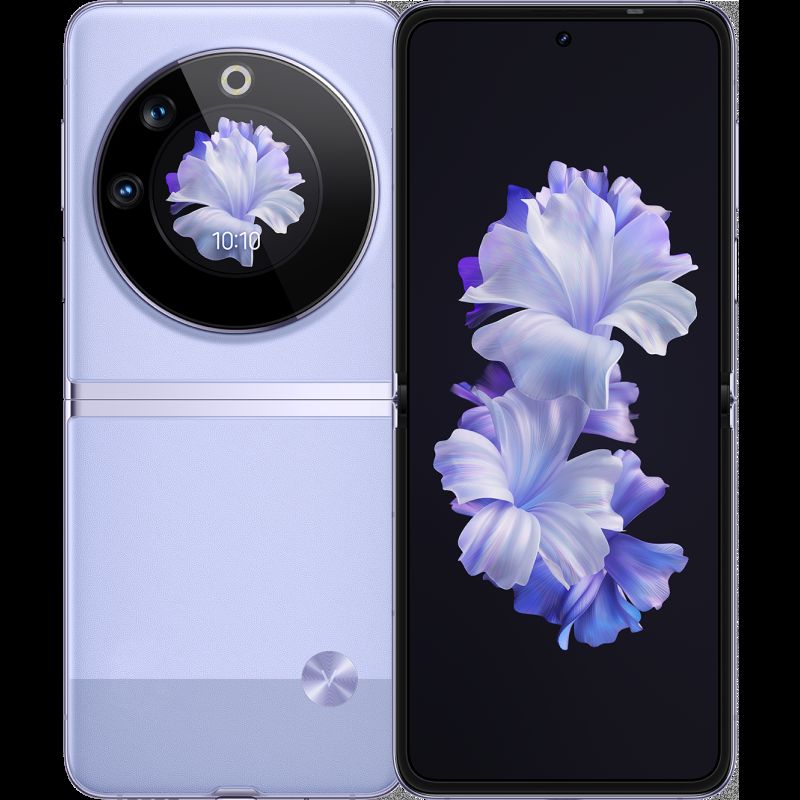
For context: you could buy both the Motorola Razr and the Tecno Phantom V Flip for roughly what a single Galaxy Z Fold cost three years ago. That is not a comparison meant to sell you two phones. It is meant to show how far the market has moved.
Should You Actually Buy One?
The answer depends on what you want from your phone. A foldable is not automatically better than a regular phone. It is different. The folding screen gives you a larger display in a smaller body. If you spend a lot of time reading, watching videos, or doing anything that benefits from more screen space, the trade-off might be worth it.
If your phone use is mostly texting, calling, and scrolling social media, a foldable is more phone than you need. You would be paying extra for a folding mechanism you will not appreciate daily.
One practical way to think about it: foldable phones used to require a payment plan. "Buy a foldable" implied "buy it over 12 or 24 months." In 2026, that is less true. The price has dropped enough that buying one outright is a realistic option for many more people.
Yes, but — durability is still the open question. The industry standard of 400,000 folds sounds impressive until you do the math. That is roughly 350 opens per day for three years. Most people do not open their phone that often. But if you are someone who fidgets, or if you hand your phone to a child who treats the hinge like a fidget toy, you might hit that number faster than expected. The good news is that most foldables now survive well past 400,000 folds in independent testing. The less good news is that "survive" and "work perfectly" are not the same thing.
The Bottom Line
Foldable phones are no longer a luxury category. They are now mid-range phones with a hinge. The price drop from $1,500 to $650— 900 in three years is one of the fastest declines for any consumer technology category. If you have been curious about foldables but the price held you back, 2026 is the first year where "should I buy a foldable" and "should I buy a regular phone" can be answered with the same budget.